
Why Researchers Use Peptide Blends in Modern Laboratory Studies

Introduction to Peptide Blend Research
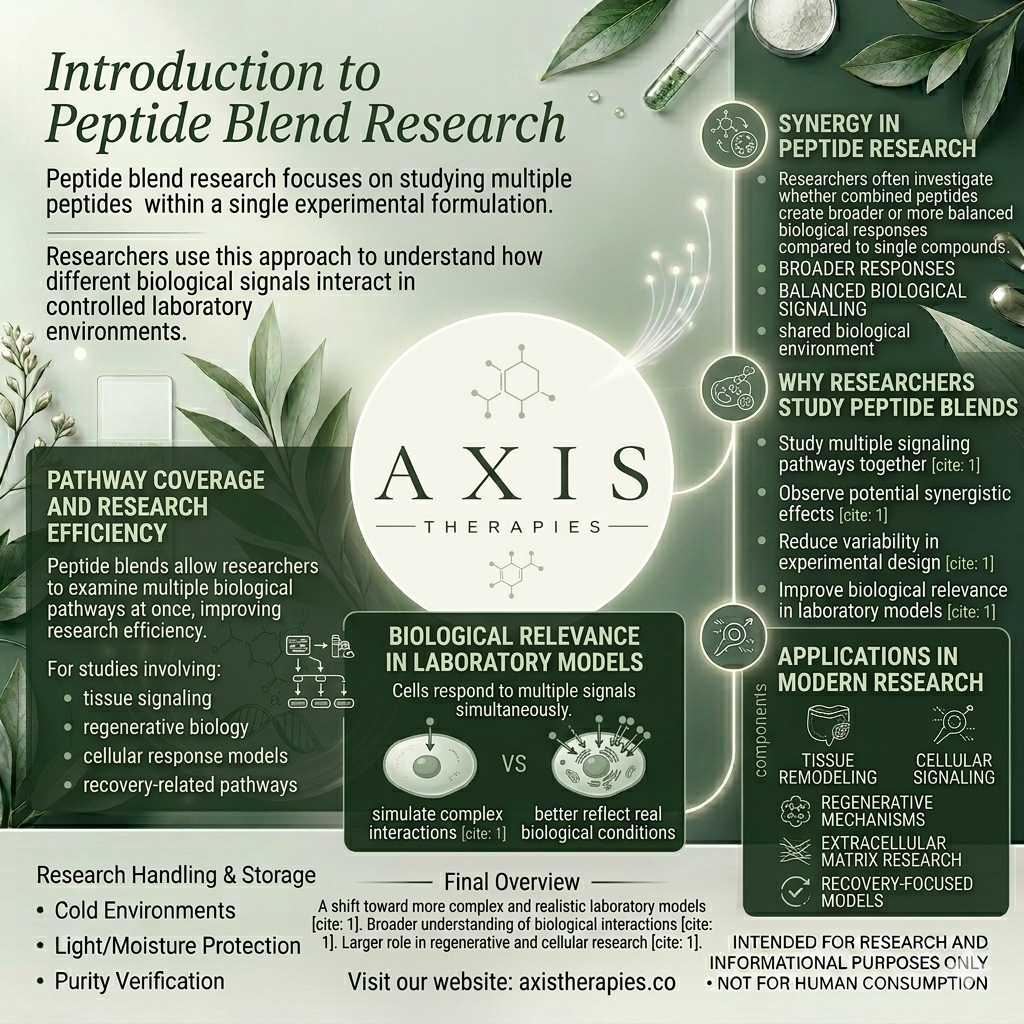
Peptide blend research focuses on studying multiple peptides within a single experimental formulation. Researchers use this approach to understand how different biological signals interact in controlled laboratory environments.
Instead of studying one compound at a time, scientists now examine combinations that may better represent how biological systems actually function.
Why Researchers Study Peptide Blends
Researchers use peptide blends because biological systems do not operate through single pathways. Multiple signals interact at the same time inside cells and tissues.
Peptide blends help researchers:
- Study multiple signaling pathways together
- Observe potential synergistic effects
- Reduce variability in experimental design
- Improve biological relevance in laboratory models
This approach supports more structured and realistic research outcomes.
Synergy in Peptide Research
One key reason for studying peptide blends is synergy. Researchers often investigate whether combined peptides create broader or more balanced biological responses compared to single compounds.
This does not mean one peptide becomes stronger alone. Instead, researchers analyze how different compounds may work together within a shared biological environment.
Pathway Coverage and Research Efficiency
Peptide blends allow researchers to examine multiple biological pathways at once. This improves research efficiency and reduces the need for separate experiments.
Scientists commonly use multi-peptide formulations in studies involving:
- tissue signaling
- regenerative biology
- cellular response models
- recovery-related pathways
This broader coverage helps researchers design more complete experimental frameworks.
Biological Relevance in Laboratory Models
Researchers prefer peptide blends because they may better reflect real biological conditions. In living systems, cells respond to multiple signals simultaneously rather than a single stimulus.
Peptide combinations help simulate these complex interactions in controlled laboratory settings. This improves the relevance of research findings and supports more advanced biological studies.
Applications in Modern Research
Peptide blend research is commonly used in studies related to:
- tissue remodeling
- cellular signaling
- regenerative mechanisms
- extracellular matrix research
- recovery-focused biological models
These areas continue to grow as peptide science advances.
Final Overview
Peptide blend research represents a shift toward more complex and realistic laboratory models. By combining multiple peptides in structured formulations, researchers gain a broader understanding of biological interactions.
As this field continues to develop, multi-peptide studies are expected to play an even larger role in regenerative and cellular research environments.
Visit Our website axistherapies.co