
Glow Blend Peptide Research: BPC-157, TB-500 & GHK-Cu Explained

What Is Glow Blend Peptide Research?
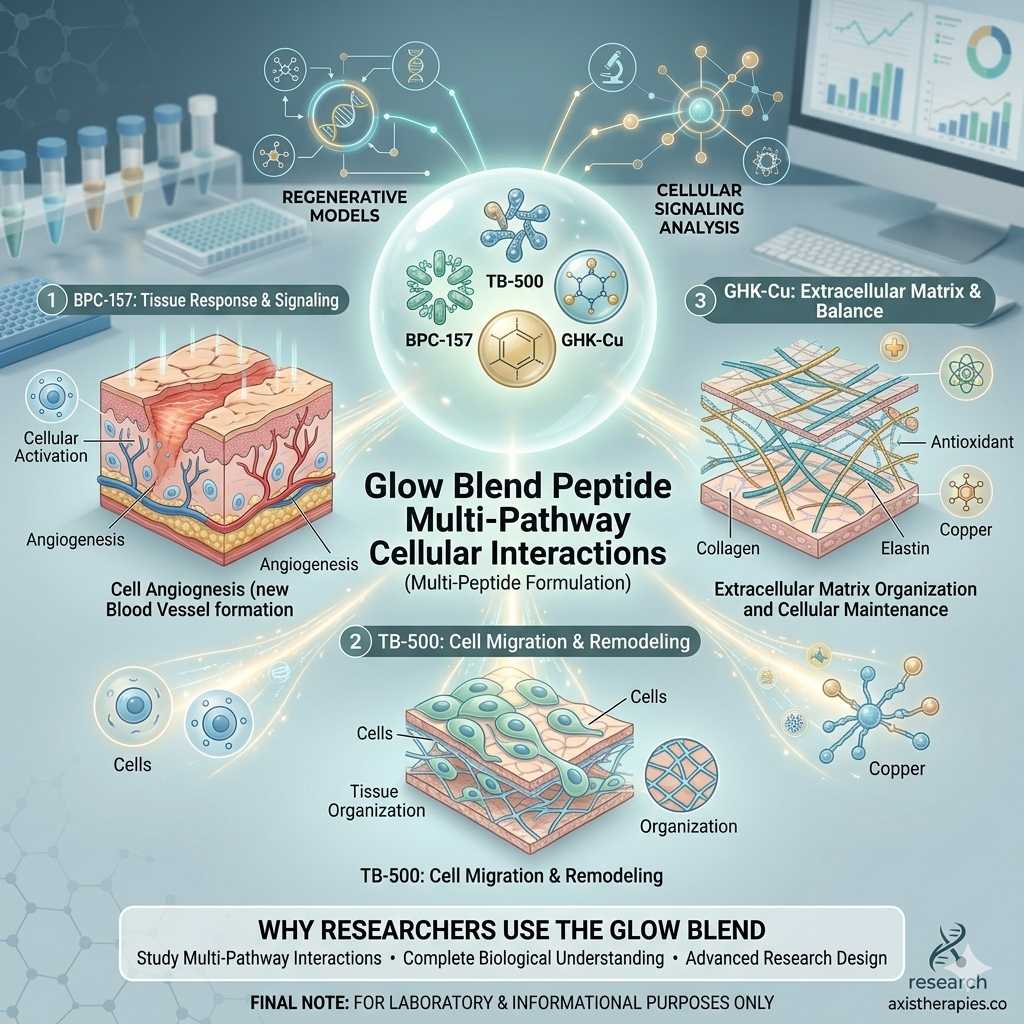
Glow Blend peptide research focuses on studying a combination of three peptides: BPC-157, TB-500, and GHK-Cu. Researchers use this multi-peptide formulation to understand how different biological pathways may interact in controlled laboratory environments.
In modern research, scientists rarely study only one pathway at a time. Instead, they often examine multiple signaling systems together. Because of this, Glow Blend has become a useful model in regenerative and cellular studies.
Why Researchers Study Multi-Peptide Blends
Researchers study peptide blends because biological systems work through multiple signals at the same time. Therefore, single-compound studies do not always reflect real biological conditions.
In contrast, multi-peptide research allows scientists to explore more complete models. For example, they can analyze how different peptides influence tissue signaling, cellular response, and structural repair pathways together.
Moreover, this approach often improves the depth of laboratory studies. As a result, researchers gain a broader understanding of biological interactions.
GHK-Cu in Glow Blend Research
GHK-Cu plays an important role in Glow Blend research. Specifically, scientists study it for its involvement in structural and cellular processes.
Researchers often focus on:
- collagen and elastin activity
- extracellular matrix organization
- antioxidant-related pathways
- cellular maintenance signals
In addition, GHK-Cu is frequently included in studies that examine tissue structure and biological balance. Therefore, it contributes significantly to multi-pathway research models.
How Each Peptide Works in the Blend
BPC-157
First, researchers study BPC-157 for its role in tissue response and cellular signaling. It is commonly used in regenerative research models.
TB-500
Next, TB-500 is studied for its role in cell movement and structural organization. Researchers often analyze how it supports tissue remodeling pathways.
GHK-Cu
Finally, GHK-Cu is studied for its influence on collagen activity and extracellular matrix regulation. It adds a structural and signaling dimension to the blend.
Together, these peptides create a multi-layered research model.
Why Glow Blend Research Is Important
Glow Blend peptide research is important because it allows scientists to study multiple biological systems at once. Consequently, researchers can observe more realistic biological responses.
For example, this blend is often used in studies involving:
- tissue remodeling processes
- cellular recovery models
- regenerative biology research
- extracellular matrix studies
- multi-pathway signaling analysis
Furthermore, this approach supports more advanced experimental design.
Transition in Modern Peptide Research
In recent years, peptide research has shifted toward combination-based models. As a result, multi-peptide formulations are now studied more frequently than single compounds.
Additionally, researchers aim to understand how different peptides interact within the same biological environment. Therefore, Glow Blend fits well into this evolving research trend.
Final Note
Glow Blend peptide research remains strictly for laboratory and informational use only. It is not intended for human consumption or therapeutic application.
Visit Our website axistherapies.co